
Crewed Moon landing scheduled for 2028 after NASA shifts docking strategy
The agency moved the Orion and Starship rendezvous to high-Earth orbit, a change driven by SpaceX engineers to simplify the mission profile.
By Fatima Laurent ·
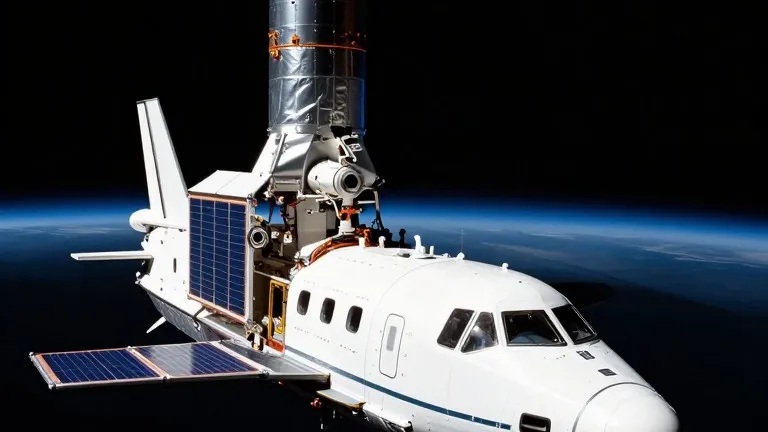
NASA confirmed on Friday that a crewed lunar landing is targeted for 2028, following a structural change in how the Orion spacecraft will connect with the Starship lander. The agency presented its most detailed public account of the Artemis Program during a news conference, explicitly acknowledging that the mission architecture has been revised. The primary modification involves moving the docking procedure from the Moon's vicinity to high-Earth orbit.
Under the new plan, Orion and the Starship lunar lander will dock while in Earth orbit before traveling together to the Moon. Previously, the two vehicles were required to meet in a near-rectilinear halo orbit around the Moon. NASA officials stated that this earlier orbital requirement demanded excessive energy and created logistical difficulties. The change aligns with requests from SpaceX engineers who met with agency representatives in early 2026. SpaceX argued that the complex lunar orbit docking was a barrier to execution. The issue became less critical after NASA canceled the Lunar Gateway project earlier this year.
The agency is pursuing two distinct landing architectures simultaneously. While the Starship plan involves a combined ascent from Earth orbit, the Blue Origin approach relies on four separate launches of the New Glenn rocket. In the Blue Origin configuration, no refueling occurs between different spacecraft. That plan also allows for the Blue Moon lander to meet Orion in low-lunar orbit, offering a different trajectory for the crew.
NASA maintains that the next major step, Artemis III, remains on schedule for summer 2027. That mission will serve as a demonstration flight where Orion docks near Earth with both the Blue Moon and Starship vehicles. The actual surface landing is reserved for Artemis IV, which is currently targeted for 2028. Administrator Jared Isaacman expressed confidence in the timeline during the briefing. He stated, "This is an achievable path we are on right now. We have the mandate, we have the resources, and the support from our stakeholders to be able to execute, and that's what we intend to do."
Leadership has reviewed every element of the program to streamline operations for the lander contractors. The agency aims to speed up development by removing complex orbital mechanics requirements. The revised timeline relies on both SpaceX and Blue Origin meeting their respective production and testing milestones. The 2028 target assumes that both vehicles will be ready for their respective roles by that date.
Source: Ars Technica