Musk Cuts Moon Fuel Flights
SpaceX chief says six to eight tankers are needed, not the twenty-two cited by a NASA safety panel.
By Adewale Rousseau ·
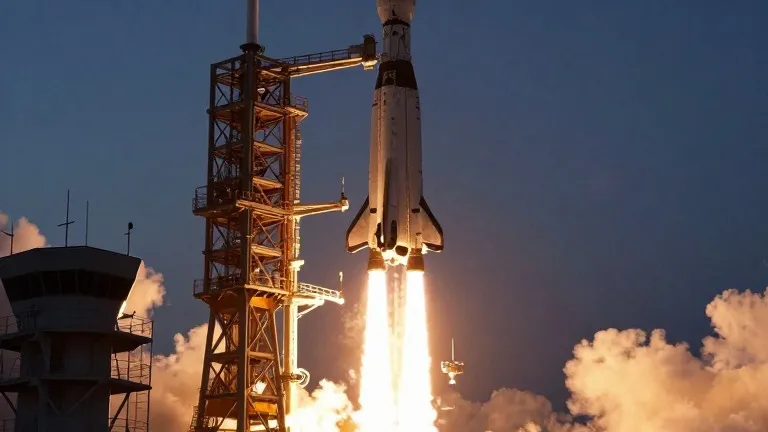
For astronauts scheduled to land on the Moon in 2028, the number of rocket launches required to fuel their vehicle will determine how long they wait on Earth. Elon Musk now says that wait time will be much shorter than a recent government advisory suggested. He estimates between six and eight tanker flights are needed, rather than the twenty-two figure cited by a NASA safety panel.
The conflict arose during a quarterly meeting of the Aerospace Safety Advisory Panel on Thursday. Panel member Charlie Precourt, a former NASA astronaut, flagged lunar lander fueling as a primary risk for Artemis IV. Precourt stated, "We need to keep our eyes on numerous required fuelings for the lander." He added, "I think the last estimate is around 22 flights."
Musk responded publicly after Ars Technica reporter Eric Berger shared Precourt's comments. Musk called the panel's figure "way too high." He wrote, "Actual number will be more like 6 to 8." This is not the first time Musk has lowered these projections. In 2021, he dismissed a government estimate of sixteen launches as "extremely unlikely" and argued eight would be the maximum needed.
The discrepancy stems from how the rocket operates. Starship consumes most of its fuel just to reach orbit. It must be refueled in space before traveling to the Moon. SpaceX plans to launch a storage tank, or depot, first. Individual tanker rockets then fly up, dock with the depot, and transfer their remaining propellant. Once the depot is full, the crewed lunar lander launches, refuels, and departs for the Moon.
The total number of launches affects cost, schedule, and safety. Each launch is a separate event with its own risks. Berger calculated that even if SpaceX launches two Starships per week by the end of 2027, filling a depot at the panel's count would take about three months. Fewer launches would compress that timeline.
The difference in estimates also reflects assumptions about technology. NASA's math appears to rely on current Starship capabilities. Musk's lower range assumes a more powerful version, known as V3, which SpaceX has not fully flown yet. Precourt noted that Artemis IV involves a "large number of firsts." He praised NASA Administrator Jared Isaacman's team for clearing obstacles for both SpaceX and Blue Origin, whose lander does not use orbital refueling for its first mission.
Source: Teslarati