
NASA hints at 22 Starship launches
New safety panel data suggests the Artemis lunar mission may require significantly more refueling flights than previously estimated.
By Fatima Laurent ·
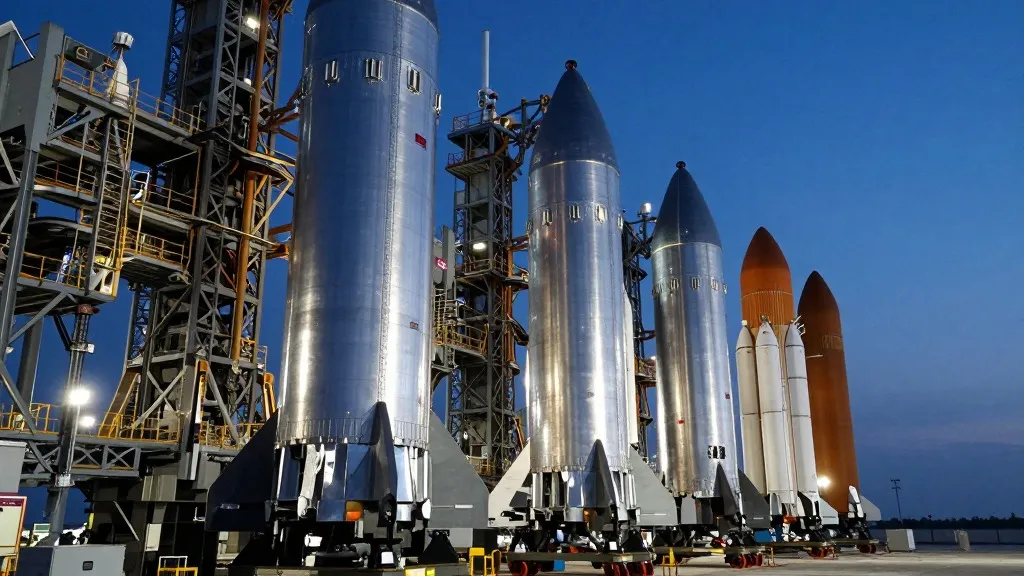
The latest internal estimate for the Artemis program suggests that 22 separate Starship launches will be necessary to fuel a lunar lander for a crewed Moon mission. This figure, disclosed during a recent safety review, stands in sharp contrast to earlier, more optimistic projections that hovered in the low double digits. The revelation underscores the immense logistical challenge SpaceX faces in supporting NASA’s goal of returning humans to the lunar surface.
NASA has historically treated this specific metric with extreme caution, often comparing its secrecy to the handling of nuclear codes. For years, the agency’s standard response to inquiries about the required number of refueling flights was that they did not know for certain and therefore would not commit to a number. This ambiguity allowed the agency to avoid pinning down a timeline that depends heavily on the performance of a rocket system still undergoing development.
In 2023, Lisa Watson-Morgan, then the director of NASA’s Human Landing System, acknowledged to reporters that while the agency had a general understanding of the requirements, she was reluctant to specify the exact count. She later indicated that the number fell within the range of high single digits to low double digits. This estimate implied that roughly a dozen launches would be needed, involving one depot Starship and approximately 11 tanker vehicles to load liquid oxygen and methane propellant in low-Earth orbit.
Some other officials have cited figures in the high teens, reflecting ongoing calculations as the program evolves. The underlying hope for both NASA and SpaceX has always been that dramatic improvements in Starship’s lift capacity would reduce the number of tanker flights required. A lower count would streamline the operation and mitigate risks associated with complex orbital rendezvous and refueling maneuvers.
However, growing concerns among certain NASA officials suggest that these capacity improvements may not arrive soon enough for Starship to play a significant role in this decade’s lunar return efforts. The new estimate of 22 launches signals that the current trajectory of the program may not align with the accelerated timelines initially envisioned. This shift in perspective forces a re-evaluation of the operational risks and the schedule for the Artemis missions.
The estimate emerged on Thursday during the quarterly meeting of the NASA Aerospace Safety Advisory Panel. Panel member Charlie Precourt, a former NASA astronaut, addressed the risks associated with the Artemis program and the specific challenges of landing humans on the Moon. His presentation provided a critical look at the safety implications of relying on such a high number of launches for a single mission.
The discrepancy between the new estimate and previous figures highlights the complexity of in-space propellant transfer. Each additional tanker flight introduces potential points of failure, from launch to docking to the actual transfer of fuel. Managing a fleet of 22 vehicles in orbit to service a single lander requires precise coordination and a high degree of reliability from both the rocket and the orbital infrastructure.
This development adds another layer of uncertainty to the Artemis timeline. While SpaceX continues to test and iterate on the Starship system, the pressure to deliver on the lunar landing goal remains intense. The number 22 is not just a logistical figure; it represents a significant hurdle that must be overcome to ensure the success of the mission. As the program moves forward, the focus will likely shift to how this number can be managed and whether any further efficiencies can be found.
The open questions surrounding this estimate are significant. It is unclear whether the number is a fixed requirement or a worst-case scenario that could improve with future upgrades. Additionally, the impact on the overall budget and schedule has not been fully detailed. For now, the figure serves as a benchmark for the scale of effort required to achieve one of the most ambitious spaceflight objectives of the 21st century.
Source: Ars Technica · original report published