Oxford Street Car-Free Phase Opens, Diverting 1.2 Miles of Traffic to Side Roads
The pedestrianisation of the street's central section has begun ahead of the holiday season, while a permanent £150m redesign is scheduled for 2027.
By Adewale Rousseau ·
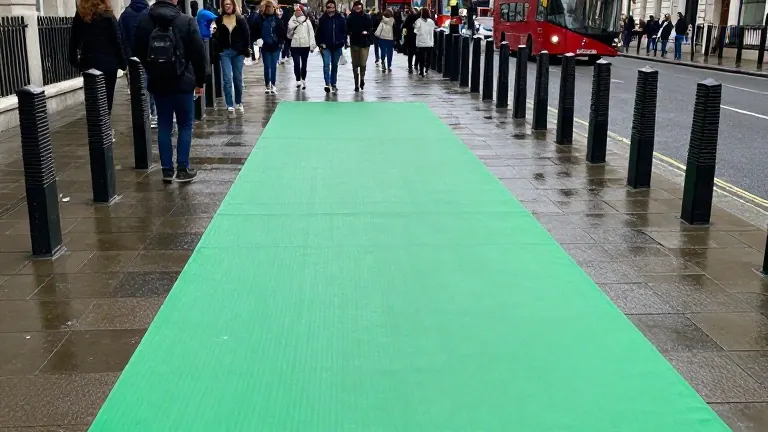
The central section of Oxford Street is now closed to all motorised traffic, marking the start of a temporary pedestrian zone ahead of the Christmas shopping period.
The closure extends from Oxford Circus station to Marble Arch, covering approximately half of the 1.2-mile street. This initial phase removes buses, bikes, taxis, e-scooters, and private cars from the roadway. A larger, permanent renovation valued at £150 million is set to begin in spring 2027, which will include the addition of trees, seating, and level plazas.
London Mayor Sadiq Khan announced the changes on a wet Monday morning at John Lewis. He described the move as a momentous day for the city's most famous shopping district. Khan stated that the project aims to prove that investing in people rather than traffic leads to better footfall and spend. He noted that the street had seen a decline over the last couple of decades and that the new layout would link to a better experience for shoppers.
The immediate impact on pedestrian flow is visible in the removal of vehicle barriers. Shoppers reported having more space to walk and browse without jostling. Daniel Te, a former city planner who moved to London from the US in July, observed that the street now resembles a permanent scramble crossing. He noted that the extra space makes him more inclined to visit, a change from his previous habit of avoiding the street due to crowds. Te acknowledged that bus rerouting might make some journeys more inconvenient but called it a small price to pay.
Retailers and visitors have reacted positively to the new environment. Raquel Cox, who was in London on holiday from Ireland, said the experience was better for shoppers. Abbas Shigival, who operates a souvenir kiosk at the start of the pedestrianised section, reported that the morning was busier than usual. He described the area as a more pleasant environment where people are happier because they can walk around. However, Shigival noted that it will take time to determine the full impact on his business.
Transport for London is managing the diversion of double-decker buses into neighbouring roads. Claire Mann, the chief operating officer at Transport for London, stated that there would still be plenty of capacity for passengers and that reliability should not be affected. She indicated that the organisation would monitor ridership to see if there is an impact. She also pointed to Bond Street and the Elizabeth Line as alternative ways for passengers to arrive.
The change has not been without criticism from those who use the street for work or transport. Ben McMullan, a taxi driver, said traffic was definitely worse on the surrounding streets. He identified accessibility as a huge problem, noting that he got stuck in areas he previously avoided. McMullan dropped off several customers who struggled with the lack of direct car access, including a mother with a pram and a woman with walking difficulties. He feared the change might negatively impact his business as customers realise they cannot get to their destinations by car.
Cyclists have also faced adjustments. Jack, a cyclist who works in construction, was stopped by security guards while riding down the street. He said he would continue to ride down the road despite the restrictions, noting that an alternative route would make his commute longer. Jack disagreed with pedestrianisation on principle, arguing that it makes it harder for people to have vehicles, similar to low traffic neighbourhoods.
The permanent plans for the street will depend on feedback from this first phase and testing. Khan said London would be closely monitoring the changes to ensure they are working for everyone. The temporary bollards and green welcome banner currently mark the boundary of the vehicle-free zone, separating the chaotic traffic at Oxford Circus from the pedestrianised space to the west.
Source: The Guardian