Oil Prices Stay Near $115 as Tehran Vows Policy Will Not Change Amid U.S. Strike Threats
Iranian leaders insist their stance remains fixed even if President Trump resumes attacks, while regional mediators gather in Tehran to manage the crisis.
By Adewale Rousseau ·
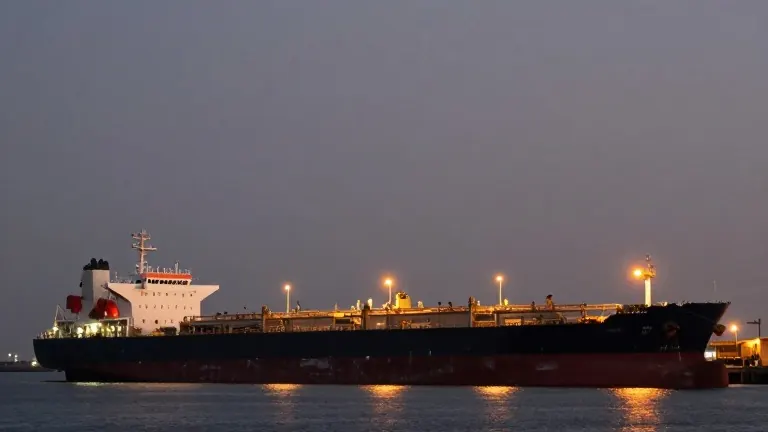
Global energy costs remain elevated as Brent crude hovers near $115 a barrel. This price point persists despite ongoing diplomatic friction between Washington and Tehran. The stability comes as Iran asserts that its foreign policy will not shift, even if the United States resumes military strikes.
President Donald Trump described his strategic options in an interview on Fox News' Sunday Morning Futures. He stated he must choose between finishing the conflict or making a deal. Trump suggested the U.S. might launch another operation called Epic Fury, a term he used for the joint campaign that began on Feb. 28. He also claimed U.S. control over the Strait of Hormuz.
Speculation suggests new U.S. strikes could follow the midterm elections scheduled for Tuesday. A third aircraft carrier group has been deployed to the region, although American diplomatic staff presence has decreased. This military buildup contrasts with the reduced diplomatic footprint in the area.
Abbas Araghchi, Iran's foreign minister, addressed the public at a televised event in Tehran. He stated that the prospect of war has not changed his government's calculations. Araghchi said, "Whether there is war or not, our policies remain the same." He noted that previous attempts by Washington and Israel failed to alter the outcome.
Esmaeil Baqaei, a spokesperson for the Iranian foreign ministry, confirmed that indirect contacts with the U.S. are continuing. He said messages are being relayed through intermediaries, even though direct talks have stalled for weeks. The ministry maintains that the window for diplomacy remains open.
Supply concerns have driven oil prices higher. The U.K. navy's Maritime Trade Operations center reported that a tanker leaving the Strait of Hormuz was hit by a projectile on Friday. The crew reported safe, but the vessel was disabled. Iran claimed to have struck four tankers on Thursday, a move Trump accused Tehran of using to inflate prices before the election.
Regional leaders are attempting to ease tensions. Saudi Defense Minister Khalid bin Salman, Pakistani General Asim Munir, and Turkish intelligence chief Ibrahim Kalin are in Tehran for security talks. They are meeting with Mohsen Rezaei, Iran's security chief. These discussions aim to support de-escalation efforts led by Qatar and Pakistan after eight months of regional war.
Violence continued in Yemen as the Saudi-led coalition intercepted a ballistic missile heading to Riyadh. The Houthis claimed they hit the capital's international airport with a missile and struck oil pumping stations with drones. In Israel, Prime Minister Benjamin Netanyahu warned that Iran and its proxies might attack to disrupt the Tuesday elections, stating, "Don't test us."
Source: CBS News