
Taiz water prices surge 75 percent as Houthi siege blocks supply routes
Families in Yemen's third-largest city are stretching 10 liters of water over four days amid fuel shortages and rising food costs.
By Fatima Laurent ·
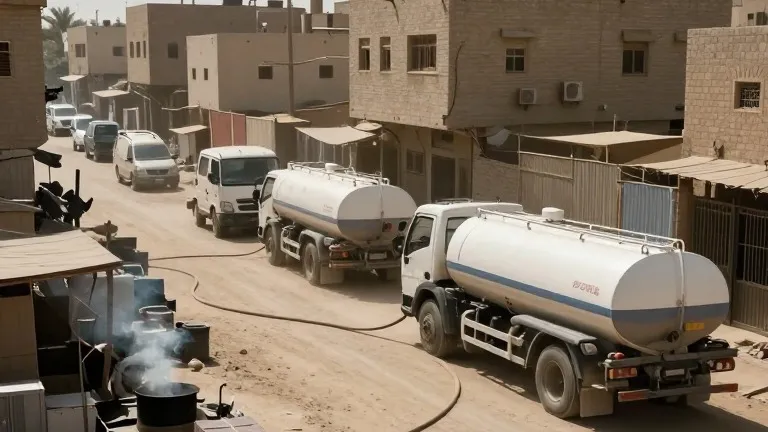
Water costs in Taiz, Yemen, have jumped 75 percent in recent weeks, forcing households to ration consumption to roughly 2.5 liters per person per day. The price spike reflects a tightening Houthi siege that has disrupted supply chains and increased fuel costs for delivery trucks.
The crisis stems from the broader civil war that began in 2014, when Houthi rebels seized much of northern Yemen. Taiz, a key battleground, suffered long-term damage to its water infrastructure. By August 2026, the conflict expanded as the Houthis captured the port city of Mokha, 130 kilometers away, and advanced on Taiz. This move cut off access to wells and restricted the entry of water trucks, pushing the city into acute shortage.
Local residents report severe adjustments to daily life. Hadil al-Shahid, a salon owner, stated that her family now stretches 10 liters of bottled water over four days, down from daily use. "We stopped drinking coffee and tea, which we used to drink daily," she said. Some families are purchasing water on credit to manage cash flow. Meanwhile, cooking gas prices have more than quadrupled, according to Hani Bafaqih of the aid group CARE. Many households now burn wood, charcoal, or cardboard for heat and cooking.
The economic strain extends beyond water. Flour and rice prices are up approximately 50 percent compared to summer levels. Fuel scarcity has reduced the capacity of desalination plants and hindered hospital operations. United Nations data indicates that Taiz province has absorbed an estimated 124,000 displaced people since August. Jens Laerke, a UN spokesperson, noted that some displaced families survive on one meal a day and rely on unprotected wells, increasing the risk of disease.
Market conditions remain volatile. Truckers making hazardous deliveries into the city have tripled their rates in some cases. The local water utility operates below capacity due to fuel deficits. Amnesty International has called for immediate road openings, warning of a humanitarian disaster. The government controls the city center, but Houthi forces hold about 80 percent of the surrounding countryside and several inner-city neighborhoods, according to anonymous Houthi officials.
The next phase of the conflict involves military positioning around the city. Analysts from the International Crisis Group describe any attempt to seize Taiz as a prolonged and costly battle. Houthi missiles hit a residential area earlier this week, killing two teenage girls. Fighting continues approximately 5 kilometers from the city center, affecting civilian movement and trade. The siege has created a feedback loop where water, fuel, and food shortages exacerbate each other, straining local markets and household budgets.
As the siege continues, the cost of living in Taiz has risen sharply. Residents like Ahmed Abdel Gaber, who shelters in a ruined building with nine relatives, report unstable incomes and heavy reliance on donations. Al-Shahid closed her salon as customers prioritized food and water expenses. Her children now eat primarily rice, bread, and cheese. The combination of rising input costs and limited supply has fundamentally altered the local economy, with water and energy now commanding the largest share of household spending.
Source: NPR
More Business · World news · Bad Business · Report a business