Amazon Abandons Four Data Centers in Loudoun County for Mixed-Use Development
Following intense local resistance, the tech giant will convert 122 acres in Northern Virginia into housing and arts facilities instead of AI infrastructure.
By Natalia Thornton ·
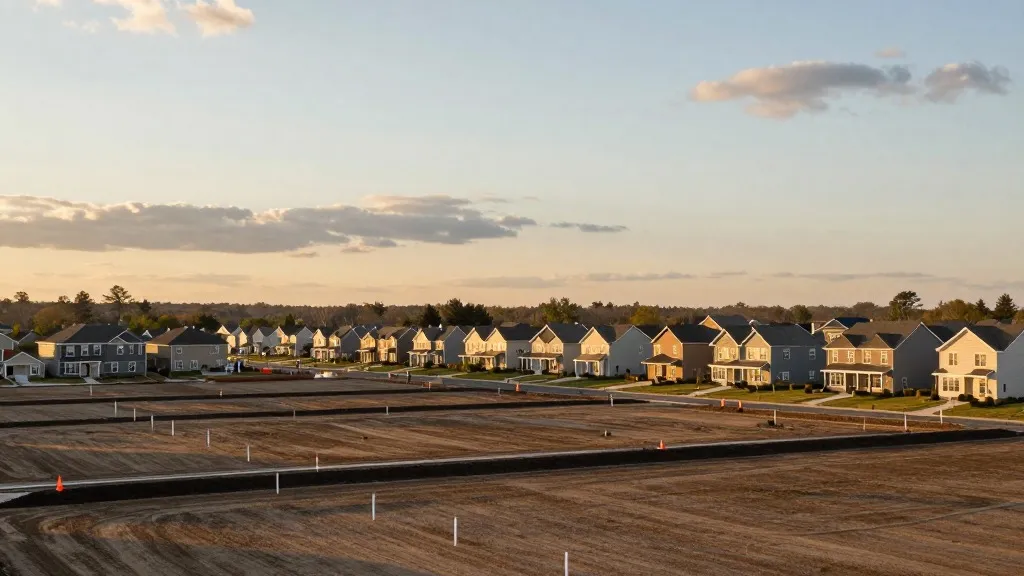
The expansion of artificial intelligence infrastructure has increasingly collided with local residential concerns across the United States. In a significant shift for Northern Virginia, Amazon has officially withdrawn its plans to construct four new data centers on a 122-acre site in Loudoun County. The company will instead repurpose the majority of the land, which is the former campus of George Washington University, for mixed-use and residential development. This decision marks a notable retreat for a region frequently referred to as "Data Center Alley" due to its high density of such facilities.
The property is located just outside Washington, D.C., in a county that has become a focal point for debates over energy consumption and urban development. Amazon initially submitted its proposal to build the facilities in July of this year. The plan drew immediate scrutiny from residents who cited noise pollution and the substantial power requirements of data centers as primary concerns. These local objections contributed to a broader change in the county’s approach to approving new data center projects.
Negotiations between the two parties intensified in September when Phyllis J. Randall, the chair of the Loudoun County Board of Supervisors, met with Amazon representatives. During these discussions, county officials suggested that the land might be better served by an alternative use. The company eventually agreed to this assessment, leading to the current agreement. Under the new terms, Amazon will donate 25 acres of the property to the county. This land is designated for the construction of a community arts center and a new recreational facility.
In addition to the land transfer, Amazon has committed to donating $5 million to the county’s housing fund. This financial contribution is intended to support the development of more attainable homes for working families within the region. The agreement effectively replaces the four planned data centers with a combination of residential units, commercial spaces, and public amenities. The move highlights the growing tension between tech industry expansion and local quality-of-life priorities.
Josh Weissman, Amazon’s vice president in charge of data center development, addressed the change in plans in a statement. He noted that the company had been eager to purchase the former university campus when the opportunity first arose. However, Weissman acknowledged that the company considered the county’s specific concerns regarding data center development at this particular location. He stated that while Amazon viewed the property’s legal development potential differently than the county, both parties concluded that a shared vision was preferable to costly litigation.
The decision comes amid a national trend where local communities are pushing back against the rapid growth of data centers. The surge in AI usage has driven demand for larger and more numerous facilities, leading to increased energy consumption and water usage. These factors have raised concerns about electricity price spikes, water shortages, and environmental impact. In response, federal leaders have also begun to weigh in on the issue. President Donald Trump recently called for data center builders and AI hyperscalers to pay local communities a dividend to offset energy-related price increases.
In a social media post, the President suggested that data centers should be required to generate their own electricity. He further proposed that these facilities give or sell excess energy back to the local community. This federal stance aligns with local efforts to ensure that the economic benefits of data centers are shared with residents. The Loudoun County agreement is seen as a model for how local governments can negotiate with major tech firms to balance development goals with community needs.
County officials have framed the outcome as a successful exercise in diplomacy. Phyllis J. Randall praised the decision to choose dialogue over confrontation. In a statement, she said that the agreement provides new places for residents to gather, create, and play. Randall emphasized that the most important outcome for her was the provision of more attainable homes for working families. This perspective contrasts with the earlier proposal, which would have added significant industrial infrastructure to a suburban residential area.
The repurposing of the site will involve converting the majority of the 122-acre parcel into a mix of residential and commercial properties. The 25-acre donation will be developed into a hub for community activities, including the arts center and recreational space. The $5 million housing fund donation will be managed by the county to address local housing affordability challenges. This comprehensive plan aims to integrate the site into the existing community fabric rather than introducing a distinct industrial zone.
The shift in Amazon’s plans reflects a broader recalibration in how tech companies approach site selection in the Northeast. While the demand for AI computing power remains high, the local resistance in Loudoun County demonstrated that community support is a critical factor in project approval. The company’s willingness to pivot from data centers to mixed-use development underscores the complexity of balancing technological growth with local environmental and social considerations. The outcome sets a precedent for similar negotiations in other regions facing data center expansion.
Source: Tom's Hardware · original report published