Tesla’s Unsupervised FSD Promise Narrows to a Small Slice of the Map
Owners will only join a managed fleet in limited zones, a far cry from the free-roaming autonomy originally marketed.
By Fatima Laurent ·
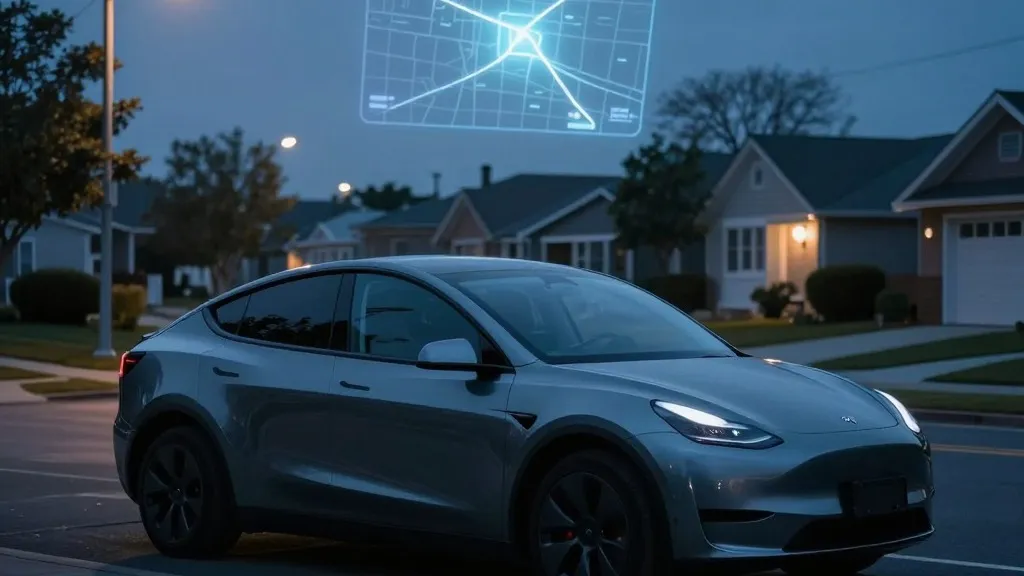
Tesla has officially pinned a date for unsupervised Full Self-Driving in customer vehicles: the second quarter of 2027. However, the latest earnings call revealed a significant limitation to this timeline. The feature will not grant owners the freedom to drive anywhere, but rather allows them to add their personal cars to Tesla’s existing managed Robotaxi network.
During the Q3 2026 earnings call, AI chief Ashok Elluswamy addressed a question backed by approximately 1.1 million shares. He clarified that the initial step is not a software update enabling owners to sleep in their vehicles while traveling to arbitrary destinations. Instead, the plan involves integrating private cars into the Robotaxi fleet, meaning the vehicles will operate only within specific zones where Tesla already runs its service.
These operational zones are currently quite limited. Tesla’s Robotaxi service is active in six U.S. metropolitan areas, but the covered areas are often small slices of those cities. For instance, the Miami zone primarily covers West Miami and a strip toward Doral and Sweetwater. Similar small geofences were launched in Orlando and Tampa in July. Within these boundaries, the service adheres to low-speed routes, largely avoids highways, and steers clear of complex driving environments.
Even within these zones, the service is not entirely unsupervised in all locations. In the Bay Area, California regulations still require a safety driver in every car because Tesla has not yet released the necessary data to the state DMV for a level beyond two autonomous operation. The fleet itself remains modest; Tesla reported nearly two million cumulative unsupervised miles by the end of Q3, a month after the Cybercab joined the Austin fleet. Third-party tracking suggests only dozens of fully driverless Teslas are currently on the road, a fraction of the numbers previously suggested by company leadership.
This approach contrasts sharply with the pitch sold to FSD buyers for nearly a decade. In July 2025, the CEO stated that unsupervised FSD would be available for personal use in certain geographies by the end of that year. A year prior, he expressed surprise if the technology wasn't ready the following year. Currently, owners with older hardware have been informed their computers cannot run unsupervised FSD, with no clear upgrade path offered.
Elluswamy cited safety as the primary bottleneck for expansion, noting that the company is limiting itself to lower-speed roads and simpler environments. While he predicts these safety hurdles will be resolved by next year, he acknowledged uncertainty in that timeline. The shift from a universal autonomy promise to a limited, fleet-integrated service raises questions about the scope of the product owners are actually purchasing.
Source: Electrek · original report published