Moscow Airports Shut for Nine Hours
Daily drone alerts have forced Russian aviation authorities to suspend flights at four major Moscow airports for up to nine hours each day.
By Adewale Rousseau ·
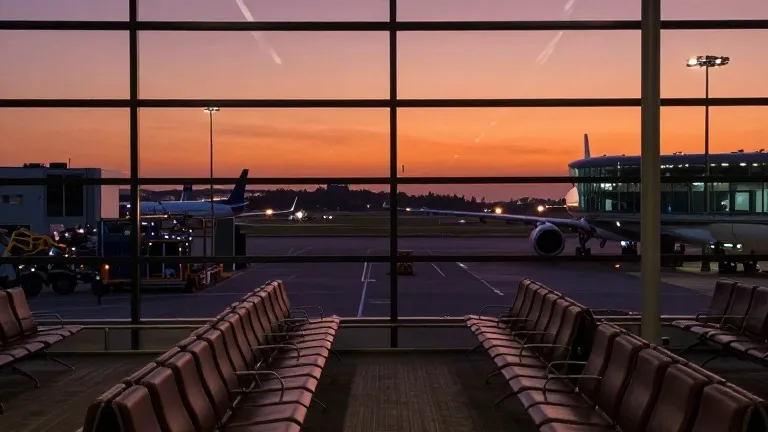
Moscow's four major airports have suspended operations for nearly every day in October, with closures lasting up to nine hours on some days. The disruption stems from repeated Ukrainian drone strikes that trigger strict safety protocols over the capital's airspace.
According to the investigative outlet Agentstvo, Domodedovo, Sheremetyevo, Zhukovsky, and Vnukovo airports have halted flights almost daily this month. The closures force airlines to divert or delay aircraft, creating significant logistical challenges for passengers and operators alike.
This pattern follows a strategic shift announced by President Volodymyr Zelenskyy in early September. He stated that Ukraine aimed to make Russian airspace completely unsafe for commercial traffic. The next day, Ukraine sent a formal warning to the International Civil Aviation Organization, signaling that the disruption was an intentional military objective.
The operational halt is driven by a procedure known as the carpet protocol, managed by Rosaviatsiya, Russia's aviation authority. This protocol mandates immediate airspace closure if an aircraft violates borders, weapons are used, or unidentified objects appear. Oleksandr Laneckij, chief executive of Friendly Avia Support, noted that every drone poses a military threat, requiring such strict measures.
Military analyst Jan Matvejev observed that Ukraine does not need advanced technology to achieve this result. Simple drones without warheads or long range are sufficient to trigger the protocol. He pointed out that Ukraine's arms industry can produce hundreds of combat-ready long-range drones daily, a capability far exceeding that of other groups that have disrupted regional airspace.
Simon Shuster, writing in The Atlantic, cited sources indicating that these efforts are just beginning. Matvejev argued that Russian air defenses have not proven fully effective against the incoming drones. He suggested that if the systems were capable of intercepting all threats, Russia would have deployed more personnel to handle them by now.
The reliance on air defense systems introduces risks to civilian aviation. Laneckij warned that Russia might lower the threshold for activating the carpet protocol, increasing the chance of incidents similar to the 2024 crash of an Azerbaijan Airlines flight. That aircraft was struck by a Russian air-defense missile while countering drones, killing 38 people.
Matvejev noted that little has changed in the defense protocol since that crash. While machine guns pose a low risk to aircraft, mass-produced missiles carry inherent defects that could send them toward nearby airliners. He also emphasized that drones do not need explosives to cause damage, as a collision with a large drone weighing dozens of kilograms can be severe.
The impact extends beyond Moscow. Ukrainian forces attacked Pskov airport in the summer of 2023, and drone debris fell on Sochi airport earlier this month. Conversely, Russia has struck Ukrainian airports, including Kyiv and Boryspil in September. These reciprocal strikes underscore the expanding scope of the air war.
Foreign airlines must now weigh the military threat against demand and insurance costs. Laneckij explained that if insurers rate the risk as high, premiums will rise sharply, pushing ticket prices up. Competition in the Russian market has already shrunk as many airlines went out of business, leaving remaining carriers with higher demand for seats. Whether they continue operating depends on the price they must pay for the danger faced.
Source: Deutsche Welle