37 Million Tons: The Weight of Russia's Arctic Bet
Despite record cargo volumes, a recent ice jam in the Vilkitsky Strait suggests the Northern Sea Route remains far less reliable than Moscow claims.
By Fatima Laurent ·
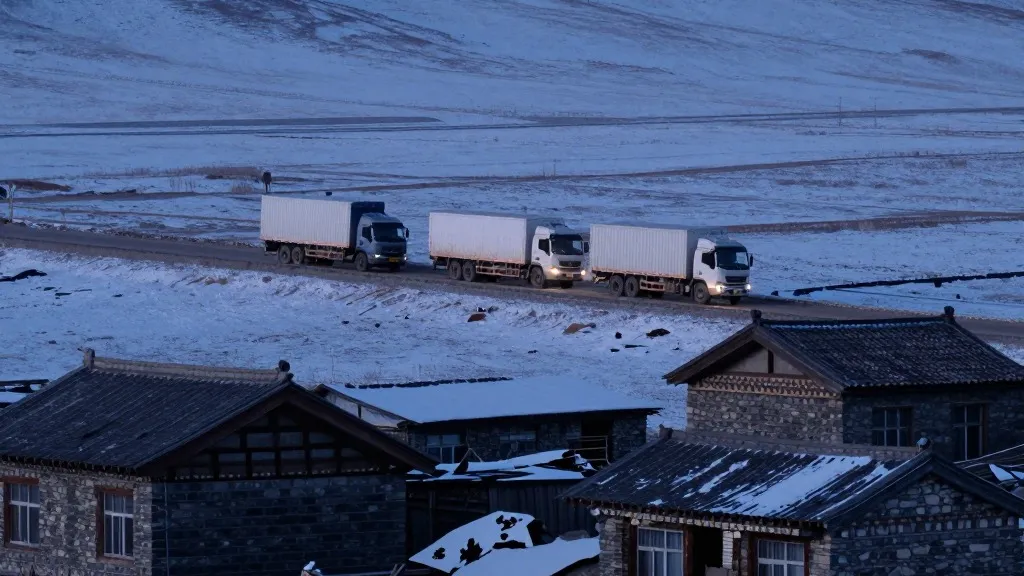
Thirty-seven million tons of cargo moved along Russia’s Northern Sea Route last year, a figure President Vladimir Putin cited during a project launch on the Taimyr Peninsula. He predicted this volume would almost double by 2030, reinforcing the Kremlin’s long-standing ambition to turn the Arctic into a primary global trade artery. Yet a recent incident involving sanctioned tankers raises doubts about whether the infrastructure and natural conditions can support such rapid growth.
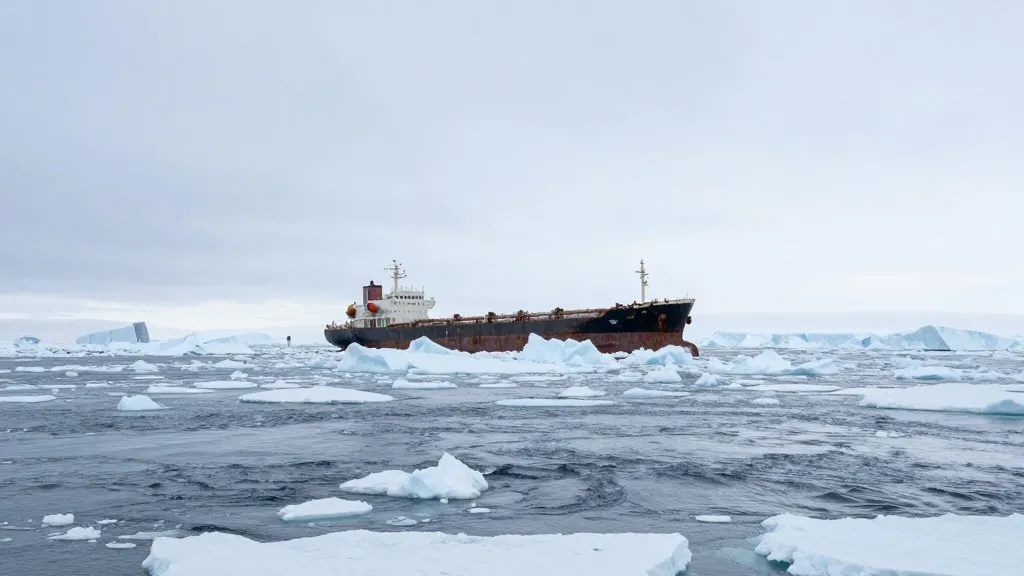
The core of the dispute lies in the gap between official projections and operational reality. In July, a cluster of Russian tankers became trapped in ice within the Vilkitsky Strait, a narrow 55-kilometer passage connecting the Siberian coast to Bolshevik Island. Two nuclear-powered icebreakers were days away, and only one tanker managed to proceed. The rest waited up to two weeks, eventually rerouting when the ice did not clear. This stall contradicts the narrative of a smoothly functioning, ice-free corridor that Moscow has promoted for years.
Experts argue that the physical mechanics of melting ice complicate the journey. Ksenia Vakhrusheva, who heads the Arctic project at the environmental group Bellona, noted that reducing ice coverage does not necessarily simplify navigation. She explained that as ice melts, it can fracture and compact tightly within narrow channels, creating bottlenecks for vessels that lack specific ice-class ratings. This phenomenon challenges the assumption that a warming climate automatically makes the route safer and more accessible for commercial shipping.
The numbers themselves present a mixed picture. While Putin’s figure of 37 million tons includes cargo moving along portions of the route, independent data tells a more modest story. The Norway-funded Center for High North Logistics reported that Russia shipped approximately 2 million tons of crude oil, or 15 million barrels, along the full route to Asia by the end of September. By mid-October, Reuters cited traders indicating the total had risen to about 20 million barrels. This represents a 50 percent increase over the previous year, but it accounts for only about 1 percent of Russia’s total seaborne oil exports. Tomas Alexa, a senior analyst at Ambrey, characterized this growth as a surge from a relatively low base rather than a fundamental shift in global trade patterns.
Western sanctions add another layer of friction to these ambitions. Alexa pointed out that restrictions on spare parts and construction materials force Russia to route supplies through third parties. Additionally, repair services previously provided by Norwegian, Danish, and Dutch companies are no longer accessible, straining the maintenance of Arctic-capable vessels and port infrastructure. This logistical hurdle could slow the expansion of the fleet needed to meet the 2030 targets.
The route is attracting attention beyond Russian borders, further complicating the geopolitical landscape. On October 22, South Korea announced that its first container ship had traversed the Northern Sea Route. Officials viewed it as a strategic shortcut to Europe but acknowledged the challenging conditions, including large ice floes in the Bering and Vilkitsky straits. China also launched its first scheduled container service to Europe via this path this year, completing multiple voyages. These moves suggest that the corridor is becoming a shared, rather than exclusively Russian, logistical asset.
Questions remain about how Moscow will manage this new traffic. Catherine Sendak of the Center for European Policy Analysis noted that Russia often treats the Arctic as an internal waterway. She expressed uncertainty about what tolls or services Moscow might impose on foreign commercial vessels. Sendak speculated that Russia could choose to limit access for other actors, potentially turning the route into a point of negotiation rather than open competition.
Security and environmental stakes are rising in tandem with traffic. On October 21, EU foreign affairs chief Kaja Kallas described the region as a front line of global power competition. NATO began its Arctic Sentry mission in February, and the United States announced plans last month to expand its military presence in Greenland. Meanwhile, environmentalists warn that increased shipping, particularly by aging shadow fleet tankers, poses significant risks. Vakhrusheva highlighted that oil degrades slowly in cold temperatures and can spread across ice, potentially accelerating climate feedback loops. She also noted the opacity of the situation, as Russia does not publish incident data, and the remote location prevents independent monitoring.
As the 2026 season progresses, the tension between political ambition and physical limitation will likely persist. The 37 million ton figure serves as a benchmark for Kremlin success, but the Vilkitsky Strait jam serves as a reminder that the Arctic’s capricious nature remains a formidable adversary. For now, the route offers promise, but it delivers it with significant caveats.
Source: RFE/RL