Ukraine Confirms Full Restoration of Critical Starlink Links for Military Drones
After a week of operational uncertainty, Kyiv states that high-speed satellite connections are back online following diplomatic talks with Washington.
By Adewale Rousseau ·
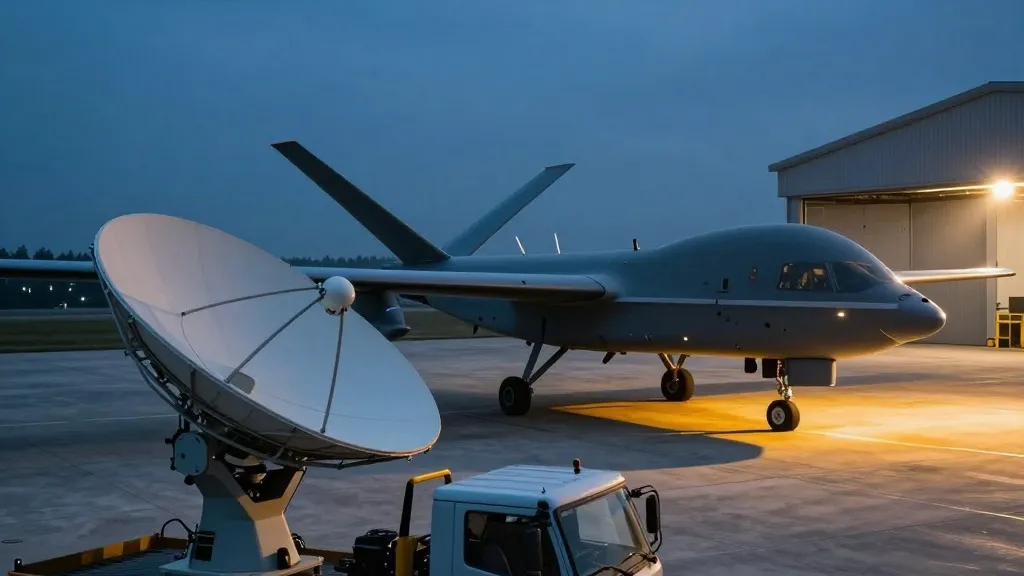
The critical satellite communications network that Ukraine relies on for its most advanced military operations has been fully restored. Defence Minister Yevhenii Khmara announced on Saturday that the restrictions placed on Starlink and Starshield services have been lifted, ending a period of disruption that stretched for more than a week. This resolution arrives at a pivotal moment for the war effort, as these systems are vital for coordinating drone strikes against Russian forces.
Khmara detailed the technical success of the restoration, noting that the connections are now stable even on equipment moving at speeds exceeding 400 kilometres per hour. He attributed the breakthrough to productive discussions with the United States and the direct diplomatic efforts of President Volodymyr Zelenskyy. For a country that has integrated Elon Musk’s SpaceX services into the core of its defence strategy, the return of these links is a significant operational win.
Despite the resolution, key questions about the origin of the initial shutdown remain unanswered. It is not publicly clear who ordered the restrictions in the first place. US President Donald Trump has denied that his administration was responsible for the decision while simultaneously defending Musk’s actions. This ambiguity has added a layer of complexity to the already strained relationship between Kyiv and Washington.
The episode has occurred against a backdrop of rising diplomatic tension. Relations were already under pressure due to Trump’s agreement to temporarily lift sanctions on Russian diesel and to allow US imports. Earlier this month, Trump publicly called for a change in Ukraine’s leadership, suggesting that a new president should be in charge. On Monday, he went further by implying that someone other than Zelenskyy should lead the negotiations for Kyiv, echoing the public confrontation the two leaders had at the White House in February 2025.
The restoration of service coincides with a renewed push for peace. The United States is actively trying to revive negotiations between Moscow and Kyiv. Diplomatic sources indicate that negotiators from all three nations are expected to meet in Abu Dhabi in the first half of November. These talks will mark the first major high-level engagement in more than four years, since Russia launched its full-scale invasion in February 2022. Kremlin spokesman Dmitry Peskov confirmed the plan on Friday, while Zelenskyy announced that both sides had agreed to hold technical-level meetings.
Amid the diplomatic maneuvers, local truces are also taking shape. Trump credited his wife, Melania Trump, with securing a ceasefire in Oleshky, a location in the Kherson region that Russian forces have occupied since 2022. Subsequent statements from Ukrainian and Russian officials set the start of this local ceasefire for October 27, with a humanitarian operation scheduled for October 29 to assist residents in the area.
On the ground, the fighting has continued with significant impact on civilian areas. In the northeastern Kharkiv region, a Russian missile strike on Lozova killed one man and wounded two others on Saturday, according to Governor Oleh Syniehubov. In the north, local authorities reported that a Russian attack on Chernihiv on Friday resulted in one death and at least 25 injuries. The front lines in the east also saw casualties, with Donetsk officials reporting one death and six injuries, including three children, in Kramatorsk. In Sloviansk, Mayor Vadym Lyakh confirmed that Friday’s attacks killed a 62-year-old woman and wounded four others.
Ukraine has also continued to strike targets inside Russian territory. On Friday and into Saturday, Ukrainian forces reported hits on several industrial sites. These included the Togliattikauchuk petrochemical plant in Togliatti, a key producer of synthetic rubber, where Mayor Ilya Sukhikh confirmed damage but no casualties. Ukraine also claimed a strike on the Proton electronics plant in Oryol, which produces components for missiles. Regional Governor Andrei Klychkov reported three deaths in an attack on an unidentified facility in the region. Additionally, authorities in Russian-occupied Crimea reported power cuts following overnight Ukrainian attacks.
Russian air defences claimed a significant victory in the ongoing aerial exchanges. The Russian Defence Ministry stated that its systems intercepted a SCALP cruise missile, four Neptune missiles, and 1,297 Ukrainian fixed-wing drones over a 24-hour period, according to state agency TASS. As is often the case in this conflict, these figures could not be independently verified by outside observers.
The situation remains fluid as both sides adapt to the new communication capabilities and the impending diplomatic meetings. The restoration of Starlink access provides Ukraine with a crucial tool for maintaining operational tempo, while the scheduled talks in Abu Dhabi offer a potential pathway to de-escalation. However, the underlying tensions regarding leadership, sanctions, and military strategy ensure that the road to peace remains long and uncertain.
Source: Al Jazeera