UK Households Begin Accumulating Emergency Supplies Following New Government Advice
Residents across the country are adjusting their shopping habits to stockpile three days of food and power in response to official warnings about potential crises.
By Natalia Thornton ·
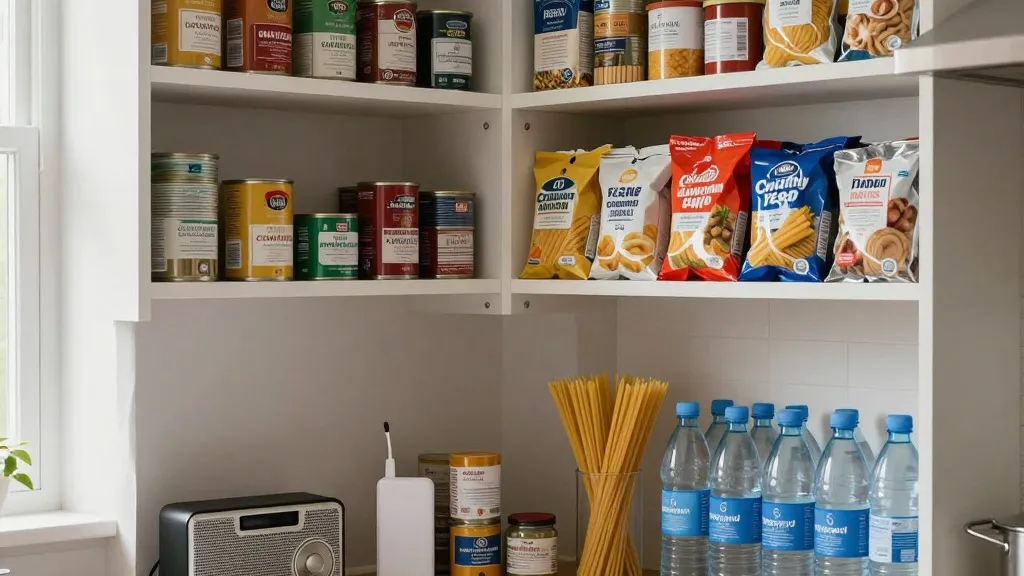
The British government launched a new public campaign on Thursday, urging citizens to maintain a three-day supply of essential items to manage various potential emergencies. This directive follows months of similar signals from ministers and has prompted a noticeable shift in consumer behavior across the United Kingdom. The advice specifically highlights the need for dried foods, bottled water, medicines, and backup power sources, items that are increasingly appearing in regular weekly shopping lists.
The push for preparedness is driven by official concerns regarding Russian state-sponsored terrorism and the growing impacts of the climate crisis. While the formal campaign began this week, many households had already started preparing in recent months. The government's Be Ready website now serves as a central hub for this guidance, encouraging families to plan for disruptions that could range from infrastructure failures to more severe geopolitical events.
In Hythe, Hampshire, Lawrence Barratt began adding tinned and dried goods to his routine purchases about two weeks ago. He is gradually accumulating beans, soups, chilli con carne, noodles, and rice, all of which can be cooked with the bottled water he is also collecting. Barratt aims to secure enough provisions for two people for three days. He is also gathering a first aid kit, a battery-powered FM radio, a torch, and a portable power bank that he believes can charge phones, run a television, and power a small fan heater.
Barratt noted that his decision was influenced by seeing the government's advice online and by memories of the initial lockdown in 2020, when shelves of basic goods were emptied. He stated that the campaign website made him realize he would otherwise be completely unprepared for any sudden disruption. His approach focuses on integrating these new items into his existing shopping routine rather than making a single large purchase.
In Greenwich, London, Marco Camurri is also building a stockpile that includes pasta, passata, stock cubes, tinned food, bottled water, medicines, and toilet paper. He cited the memory of the pandemic as a key motivator for his family. Camurri explained that because they have relatives in continental Europe, they could potentially leave temporarily if the UK entered a state of war or if London faced direct attacks or extreme infrastructure failure that threatened their employment.
Camurri’s household has stored wood in his small garden to use for lighting a barbecue and boiling water if necessary. They keep power banks charged, maintain USB rechargeable flashlights, and ensure their vehicle fuel tank stays above 50 percent, which provides approximately 300 miles of driving range. The family began this process a few months ago when reports linked El Niño to potential supply chain disruptions. To manage their inventory, they are creating a spreadsheet to track expiry dates, allowing them to rotate items as they are consumed.
Jack Davenport from North Shields on the River Tyne also pointed to El Niño as a reason for stockpiling, though he described it as difficult to judge the scale of the numerous threats facing the nation. He listed climate-related disasters, Russian shadow threats, artificial intelligence, and rising interest rates driven by energy insecurity as key concerns. Davenport observed that the country's physical and technological infrastructure is creaking and outdated, and he suggested the government aims to reduce long-term panic by framing these events as possible rather than imminent.
Not all residents are convinced by the new guidance. Deirdre O'Sullivan from Leicester described the advice as daft, comparing it to 1970s instructions to hide under tables during nuclear attacks. She argued that the guidance appears inadequate for a genuine emergency and noted that any danger to drinking water should be anticipated with more precision. O'Sullivan suggested the policy resembles a bureaucratic effort to demonstrate that a plan exists, even if that plan is ultimately ineffective.
The campaign marks a significant step in how the government communicates with the public about resilience. While some citizens view the advice as a practical response to modern uncertainties, others see it as an overreaction to threats that have not yet materialized. The coming weeks will likely see whether this three-day supply standard becomes a permanent fixture in household planning across the UK.
Source: The Guardian