Sudan's Fuel Crisis: Daily Life Under Strain as Prices Soar
Rising costs and scarcity are forcing transport unions to hike fares, squeezing the budgets of workers, traders, and families across the country.
By Fatima Laurent ·
Sudan's transport sector is facing a significant adjustment phase as fuel scarcity drives up operational costs. This month, the Sudan's Transport Chambers Union, the body responsible for regulating public and private transport, announced substantial fare increases. Intercity bus fares have risen by 40%, while minibus fares have climbed by 30%. These changes represent the most recent development in a series of economic pressures that have been building since the war began in April 2023.
The immediate impact of these hikes is felt most acutely by low-income workers who rely on public transit. Aziza Ibrahim, a 38-year-old cleaner in Port Sudan, has reduced her work schedule to three days a week to manage the new travel expenses. Her daily round trip to the main city-center station now costs between 11,000 and 14,000 pounds, a stark contrast to the 700 pounds it cost before the conflict. With a monthly salary of 400,000 pounds, transport now consumes nearly half of her income, leaving less room for her children's needs and her own diabetes treatment. She often borrows money to get to work, repaying the loan once she receives her pay.
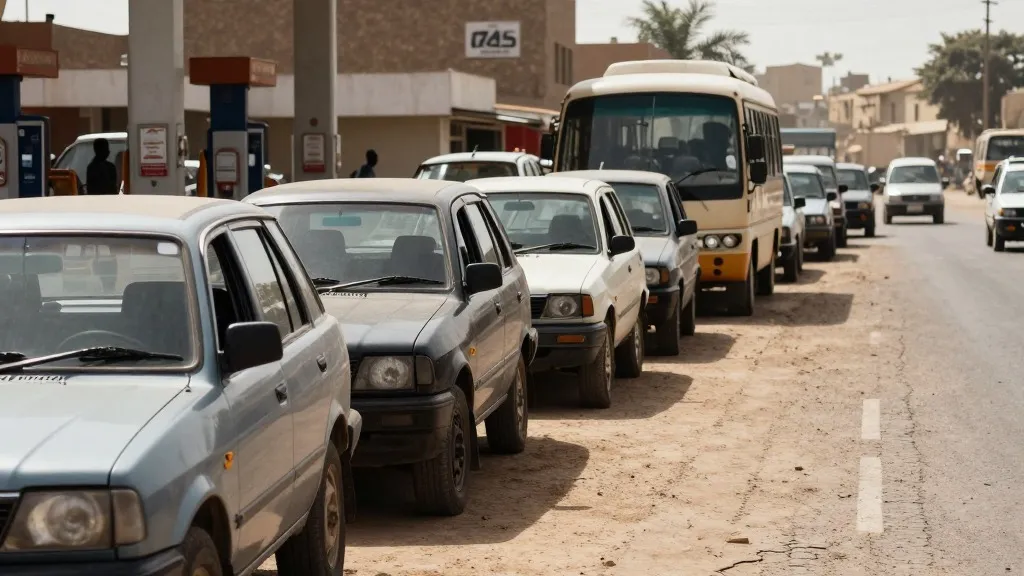
Drivers are experiencing the squeeze from the supply side. Azhari Mohamed, a 60-year-old minibus driver in Port Sudan, operates between the Shagar neighborhood and the city center. He makes seven round trips daily, working from 6am to 9pm. However, fuel availability has forced him to work only two days and spend a third waiting in line. A single wait can exceed five hours, and if the fuel runs out before he reaches the pump, he must restart the queue. His vehicle consumes about 11 liters of petrol daily, which costs roughly 105,000 pounds. After covering these operating costs, he is left with about 50,000 pounds to support his wife and a daughter in university. He noted that the primary need is for fuel to be consistently available so work can continue.
The root of the shortage lies in the disruption of domestic production and the complexity of imports. The Ministry of Energy and Petroleum estimated war-related losses at $20 billion last year. Attacks on the Balila oil field have disrupted supplies to the Khartoum refinery, which previously met about 60% of the national demand for petrol and liquefied petroleum gas. With domestic output sharply reduced, the country relies on imports during a period of global fuel price increases. Economic analyst Sidi Ohaj pointed out that government rules requiring importers to deposit 200kg of gold in the Central Bank and own storage facilities have led some firms to exit the market. This has reduced supply relative to demand, a situation he says requires urgent easing of import procedures.
Businesses are also absorbing the higher costs. Ahmed al-Haj, a trader in Omdurman market who packages skincare products, reports that the cost of moving a tonne of goods has increased by 30 to 50 percent. These costs are passed on to consumers through higher product prices. Local deliveries in Omdurman that once cost 5,000 pounds now range from 10,000 to 12,000 pounds. Reaching customers in other states has become nearly impossible due to the expense. Al-Haj noted that transport and distribution workers are making fewer trips, causing goods to pile up at traders' premises. The combination of drone attacks on infrastructure and the ongoing global energy market disruptions leaves little hope for quick relief in the near term.
Source: Al Jazeera